
Search the encyclopedia
1,691 animals
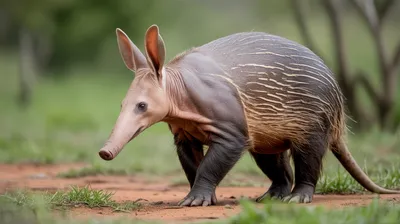
Aardvark
Orycteropus afer
The aardvark looks like an animal assembled from spare parts — rabbit ears, a pig's snout, a kangaroo's tail — and it is related to none of them, nor to the anteaters and pangolins it so closely resembles. It is the only living member of an entire order, Tubulidentata, named for its strange teeth: they have no enamel, are built from bundles of upright dentine tubes, grow continuously to replace what wears away, and sit only at the back of the jaw. It is a phenomenal digger, able to excavate faster than several people with shovels, and its burrows matter far beyond itself — warthogs, hyenas, porcupines, owls and hares all shelter in abandoned aardvark holes, making it a keystone species whose loss would evict an entire community. It hunts ants and termites by night, sweeping a long sticky tongue through nests it has torn open, and can seal its nostrils to keep the insects out. One plant depends on it entirely: the aardvark cucumber fruits underground, and the aardvark digs it up for its water and buries the seeds in its dung. Its likeness to other ant-eating mammals is convergent evolution — the same diet, solved the same way, by animals that are not related at all.
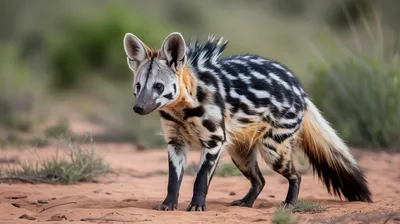
Aardwolf
Proteles cristata
The aardwolf is a hyena that gave up being a hyena. It looks like a small striped hyena and it is one, but where its relatives evolved bone-crushing jaws, the aardwolf abandoned the entire carnivore project and went after termites. It eats almost nothing else — as many as a quarter of a million in a single night, lapped up with a broad, sticky tongue — and it does not dig into their mounds but takes them from the surface as they forage. It specialises on one genus, Trinervitermes, which defends itself with a noxious terpene secretion that deters almost every other predator, and the aardwolf simply tolerates it. Its jaws have collapsed accordingly: the cheek teeth are reduced to widely spaced, useless pegs, and only the canines remain, kept for fighting rather than eating. It is nocturnal, largely solitary but monogamous, and it defends a territory containing enough termite mounds to see it through the year, marking the boundary meticulously.
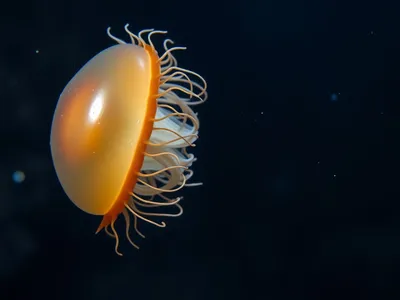
Abyssal Comb Jelly
Bathocyroe fosteri
The Abyssal Comb Jelly, Bathocyroe fosteri, is a translucent, deep-sea ctenophore notable for its delicate, balloon-like body and shimmering rows of cilia used for locomotion. Found at great oceanic depths, this invertebrate often drifts in the midwater column, capturing small prey with its lobes. Its bioluminescent capabilities create mesmerizing light displays, which may serve as camouflage or to deter predators. Despite its fragile appearance, the Abyssal Comb Jelly is well-adapted to the extreme pressure and darkness of the deep sea.
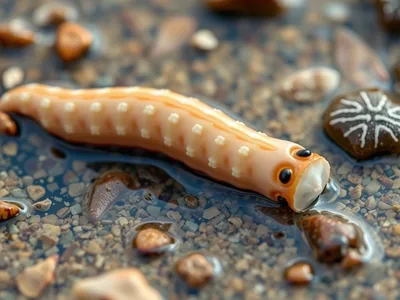
Acorn Worm
Saccoglossus kowalevskii
Acorn worms are soft-bodied, burrowing marine invertebrates belonging to the class Enteropneusta. They are named for the acorn-like appearance of their proboscis, which is used for digging and feeding. Acorn worms play an important role in marine ecosystems by aerating sediments and recycling nutrients. These animals are considered evolutionary significant as they share characteristics with both vertebrates and invertebrates, offering insight into early deuterostome evolution.
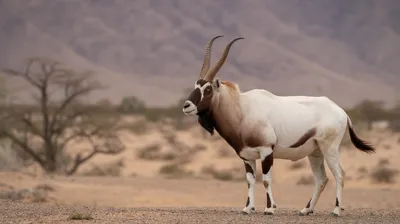
Addax
Addax nasomaculatus
The addax is a desert antelope so committed to aridity that a wild individual may never drink standing water in its life, extracting all it needs from desert grasses, acacia and the dew that condenses on plants before dawn. Its kidneys concentrate urine to a syrup and it feeds mainly at night, when the sparse Sahelian vegetation has reabsorbed the most moisture. The coat performs a seasonal trick: greyish-brown for winter warmth, then bleaching to near-white in summer to reflect the sun. Broad, splayed hooves with flattened soles spread its weight across soft dunes where a hard-hoofed antelope would sink. That same dune-adapted build makes the addax a poor sprinter over firm ground, and this is precisely what destroyed it — once hunters had four-wheel-drive vehicles, an animal that could outlast a lion could not outrun a truck. Both sexes carry spiralling horns of two to three twists, up to about 80 cm long. Today it is one of the most endangered large mammals on Earth, with a wild population in the Termit and Tin Toumma region of Niger that has at times been counted in the dozens.
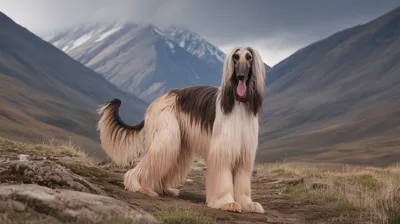
Afghan Hound
Canis lupus familiaris
The Afghan Hound is an ancient breed of sighthound renowned for its elegant appearance, long silky coat, and distinctive ring curl at the end of its tail. Originally bred in the mountainous regions of Afghanistan, this dog was valued for its speed, agility, and ability to hunt game over rugged terrain. Afghan Hounds are known for their independent and sometimes aloof temperament, yet they are affectionate with their families. Their unique appearance and dignified demeanor have made them popular in dog shows and as companion animals worldwide.
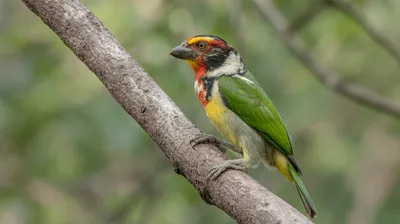
African Barbet
Lybiidae
Barbets are plump, colorful birds found throughout tropical regions of Africa and Asia, known for their stout bills and bristle-fringed faces. Members of the family Lybiidae, African barbets are particularly noted for their bright plumage, which often includes striking reds, yellows, and greens. They primarily inhabit forests and woodland environments, where they excavate nest holes in trees. Barbets are vocal birds, producing distinctive, repetitive calls that can be heard over long distances. Their diet consists mainly of fruit, but they will also eat insects and other small animals.
African Bullfrog
Pyxicephalus adspersus
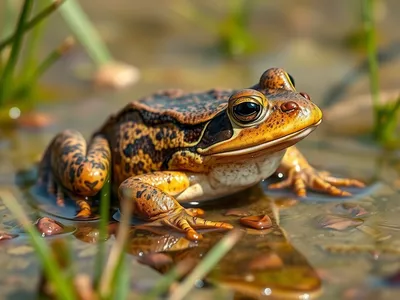
The African bullfrog inverts the usual amphibian rule that females are the larger sex: males can exceed 2 kg and grow roughly twice the size of the females they mate with, because male-male combat over breeding pools rewards bulk. Along the lower jaw sit three odontoid projections — bony, tooth-like spikes that let it hold struggling prey, and give a bite that draws blood. It eats essentially anything it can cram down, including rodents, birds, other frogs, and famously young cobras. Its most remarkable behaviour is paternal: a male guards the tadpole mass, and when the puddle begins to evaporate he will excavate a channel with his hind legs to drain water from a shrinking pool into a larger one, saving the shoal. He is not sentimental about it — he also eats a share of the tadpoles he is guarding. Between rains the frog burrows down and encases itself in a cocoon built from layers of shed skin, sealing in moisture, and can wait out drought underground for a year or more.
African Butterflyfish
Pantodon buchholzi
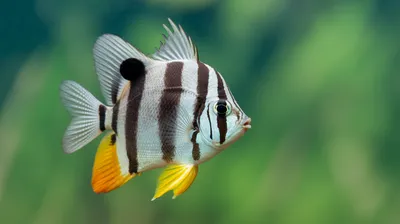
The African Butterflyfish is a distinctive freshwater fish known for its broad, wing-like pectoral fins and surface-dwelling lifestyle. Native to slow-moving rivers and swamps of West and Central Africa, this fish is specially adapted for life at the water's surface, where it hunts insects and small invertebrates. Its flattened body and upturned mouth allow it to capture prey efficiently, while its camouflage helps avoid predators. African Butterflyfish are popular in the aquarium trade due to their unique appearance and fascinating behaviors.
African cichlid
Various (notably Pseudotropheus zebra, Haplochromis burtoni, and others)
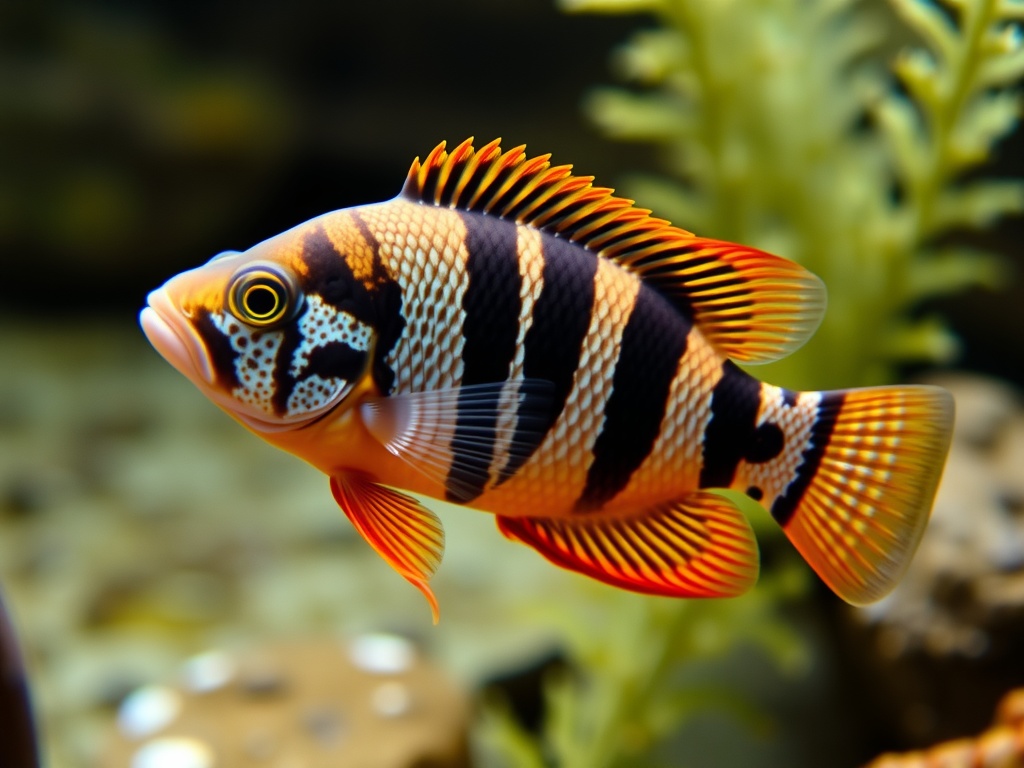
African cichlids are a diverse group of freshwater fish native primarily to the Great Rift Valley lakes of East Africa, especially Lakes Malawi, Tanganyika, and Victoria. They are renowned for their vivid coloration, complex social behaviors, and remarkable adaptability, with hundreds of species exhibiting a wide range of shapes and sizes. African cichlids are popular in the aquarium trade due to their striking appearance and active personalities, but they require specialized care. Their rapid speciation and ecological diversity make them a key subject in evolutionary biology studies. These fish play important roles in their native ecosystems, contributing to the unique biodiversity of African freshwater habitats.
African Civet
Civettictis civetta
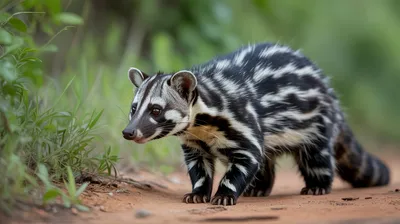
The African civet is a nocturnal, medium-sized mammal known for its distinctive black and white markings and a mane of long hair along its back. It is famous for the musky secretion called civetone, which is used in the perfume industry. The species is solitary and highly territorial, using scent marking to communicate with others. African civets are agile climbers and swimmers, inhabiting a wide range of environments across sub-Saharan Africa.
African Clawed Frog
Xenopus laevis
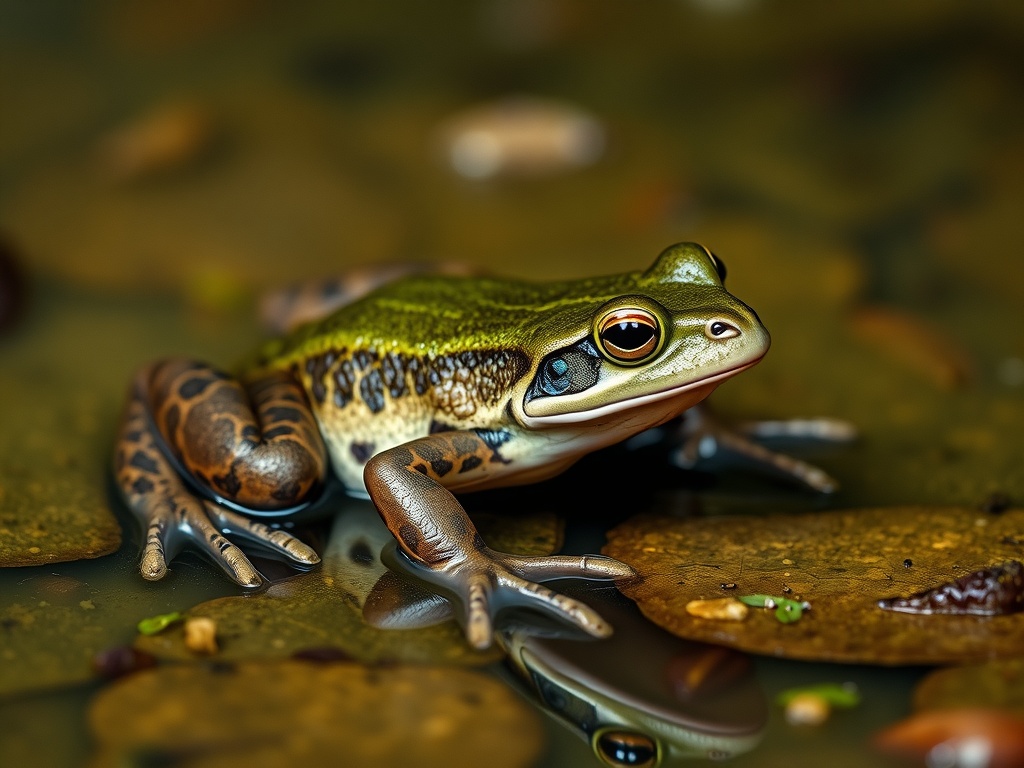
Xenopus laevis is a frog built for a life entirely in water: it has no tongue, no eardrum and no visible ears, and it shovels food into its mouth with its hands. Along its flanks run rows of stitch-like sensory organs — a lateral line retained into adulthood, which is unusual for a frog and lets it feel the water displaced by prey in muddy ponds. Its "claws" are three black keratinised toe tips on each hind foot, used to shred carrion. Males call underwater without moving air at all, clicking by snapping cartilage discs in the larynx. Its strangest cultural role came in the 1930s, when the Hogben test made it the world's pregnancy test: hormone in a woman's urine, injected into a female frog, made her lay eggs within hours, and hospitals kept tanks of them for three decades. That global trade in laboratory frogs is now strongly implicated in spreading the chytrid fungus that has since devastated amphibians on several continents — Xenopus carries it while largely resisting it.
African Elephant
Loxodonta africana
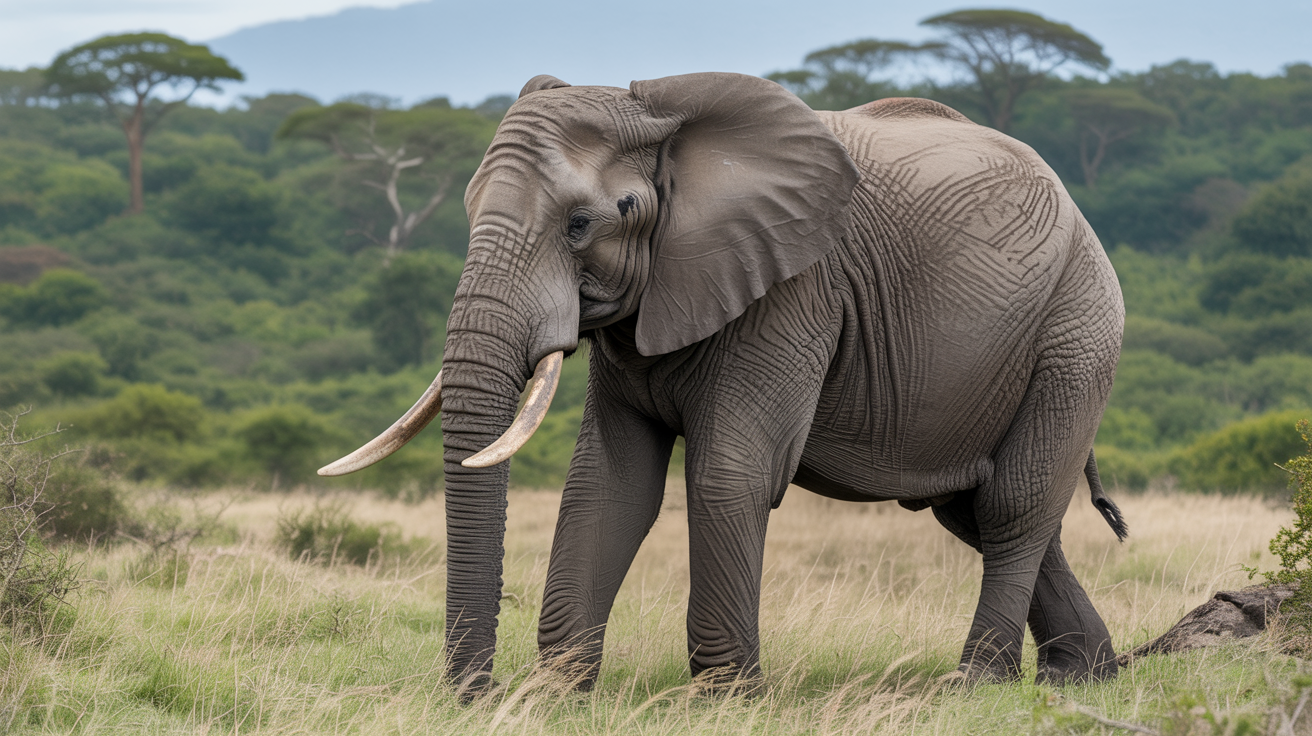
The African elephant, scientifically known as Loxodonta africana, is the largest land mammal on Earth, with bulls reaching up to 4 meters at the shoulder and weighing as much as 6,000 kilograms. These majestic creatures are divided into two species: the African bush elephant and the African forest elephant. The bush elephant, found in a variety of habitats from savannas to deserts, is distinguished by its larger size, broader ears, and curved tusks, which are adaptive traits for dissipating heat and foraging. In contrast, the forest elephant, which inhabits the dense rainforests of Central and West Africa, has straighter tusks and more rounded ears, adaptations that facilitate maneuvering through thick underbrush. Both species exhibit complex social structures, typically led by a matriarch, where females and their calves form tight-knit family groups. Their grey skin is not just a protective layer but also serves as a cooling mechanism, with mud baths providing sunscreen and pest protection.
African Fat-tailed Gecko
Hemitheconyx caudicinctus
The African Fat-tailed Gecko is a medium-sized, nocturnal lizard native to West Africa. Recognized for its distinctive broad tail, which stores fat as an energy reserve, this gecko displays earthy color patterns with bold stripes or bands. It prefers arid to semi-arid environments, often sheltering under rocks or in burrows to avoid the harshest heat. Calm and docile, the African Fat-tailed Gecko is a popular choice for reptile enthusiasts due to its manageable size and hardy nature.
African Golden Cat
Caracal aurata
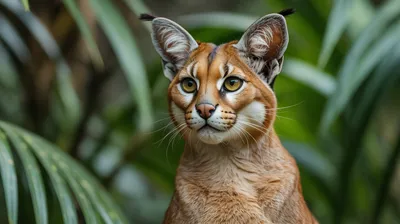
The African Golden Cat is a medium-sized, elusive wild cat native to the rainforests of Central and West Africa. It has a robust build, with a short tail and rounded ears, and its fur color ranges from golden or reddish-brown to silvery-grey, often marked with faint spots or stripes. This solitary and primarily nocturnal feline is seldom seen in the wild due to its secretive nature and dense forest habitat. African Golden Cats are skilled hunters, preying on a variety of small to medium-sized mammals, birds, and reptiles.
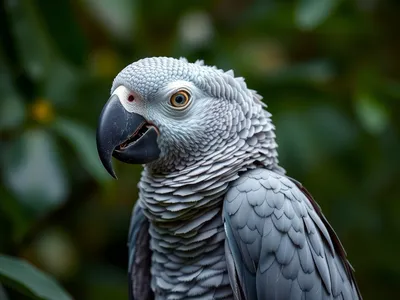
African Grey Parrot
Psittacus erithacus
The African grey is the parrot that changed what science was prepared to say about animal minds. Over three decades, Irene Pepperberg's grey, Alex, learned to label around a hundred objects, colours, shapes and materials, and — crucially — to combine those categories: shown a tray, he could answer which object was both green and three-cornered, which requires holding two attributes in mind at once. He grasped same and different as abstract concepts, and he understood none, a functional zero, which he produced spontaneously when asked which colour differed among a set of identical objects. He is also the only non-human animal on record to have asked an existential question, when he saw himself in a mirror and asked what colour he was. Greys are long-lived, often past fifty, and intensely social, which is exactly why they suffer so badly alone: a bored grey plucks out its own feathers. The demand created by that intelligence has been ruinous, and trapping for the pet trade, combined with habitat loss, has pushed the species onto the endangered list.
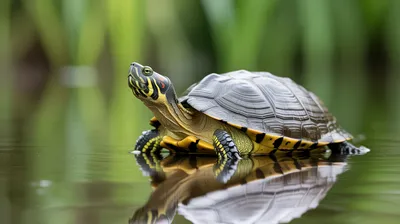
African Helmeted Turtle
Pelomedusa subrufa
The African Helmeted Turtle is a small to medium-sized freshwater turtle known for its distinctive domed shell and broad, flattened head. Found throughout much of sub-Saharan Africa and parts of the Middle East, it is highly adaptable and inhabits a variety of freshwater bodies, including ponds, lakes, and slow-moving rivers. This turtle is famous for its ability to survive in temporary water sources by burrowing into mud during dry periods, a behavior known as aestivation. It is an opportunistic feeder, consuming a wide range of animal and plant matter. African Helmeted Turtles are also known for their social basking behavior and occasional group hunting.
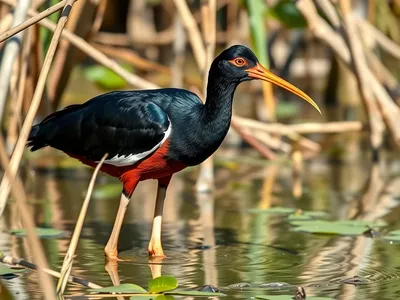
African Jacana
Actophilornis africanus
The African jacana runs the standard bird family upside down. Females are about 1.5 times heavier than males, hold a territory, and mate with up to four of them; the males build the nests, incubate the eggs, and raise the chicks alone. A father moves his brood by scooping the chicks up under his wings and walking off with four sets of tiny legs dangling from his flanks — one of the strangest silhouettes in African wetlands. The bird's most obvious feature is its feet: toes and claws so absurdly elongated that its weight is spread across floating lily pads, letting it stroll over open water and earning it the names lily-trotter and Jesus bird. Chicks can dive and hide beneath the surface, clamping onto submerged vegetation with only the bill tip exposed to breathe. It feeds on insects and snails picked from the undersides and surfaces of floating leaves, flipping pads over with the bill. Its range spans sub-Saharan floodplains, swamps and lagoons wherever water lilies persist.
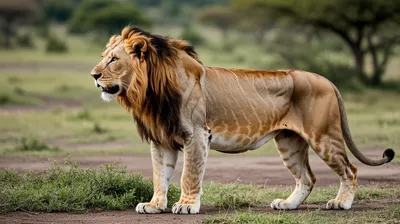
African Lion
Panthera leo
The lion is the only truly social cat, and its social life explains most of what it is. A male's mane is an honest advertisement: darker manes correlate with higher testosterone and better nutrition, and in Serengeti experiments using life-sized dummy lions, females approached dark-maned models while rival males avoided them. Manes are costly — dark manes trap heat, which is why males in hot, arid places such as Tsavo are often nearly maneless, and why mane colour lightens in cooler seasons. The roar carries up to about 8 km, produced by unusually square, fat-padded vocal folds that let the lion push huge volume without straining the larynx. Prides are matrilineal, and the females stay for life while coalitions of males hold tenure for only a couple of years before being ousted; incoming males kill the cubs, which brings the females back into oestrus. Lionesses do most of the hunting, but males are decisive on large, dangerous prey such as buffalo. Fewer than about 25,000 remain in the wild, in a fraction of a range that once stretched from Greece to India.
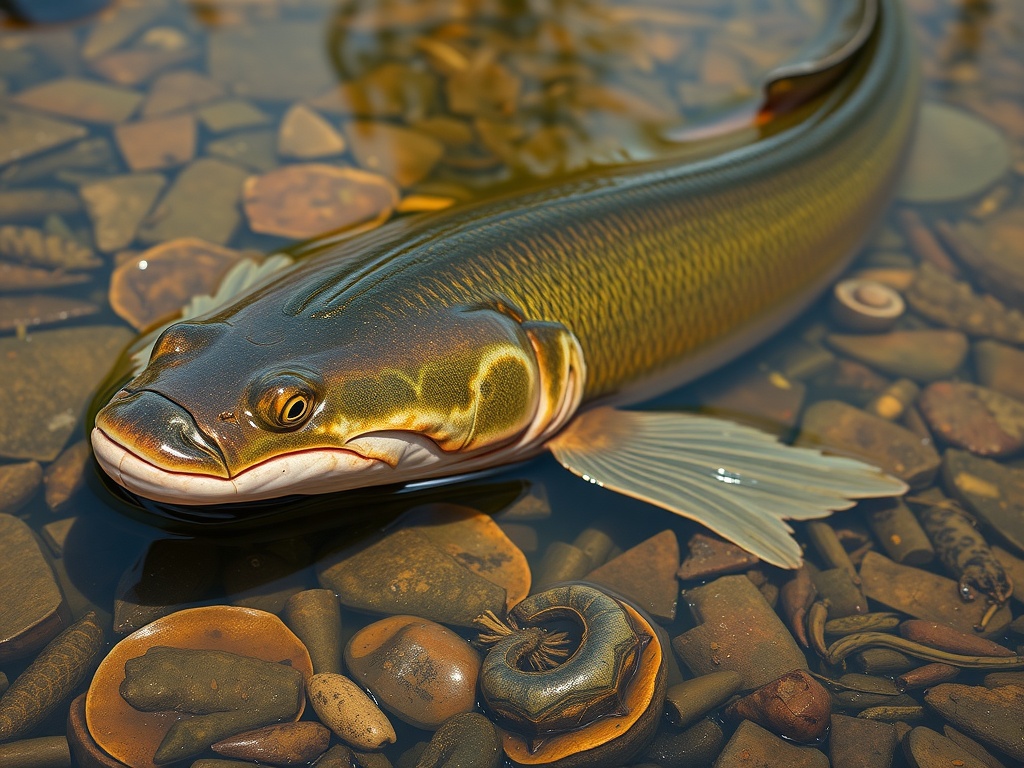
African lungfish
Protopterus annectens
An African lungfish will drown if you hold it underwater. Its gills are vestigial and it must surface to fill a pair of true lungs — an obligate air-breather among fish. When its swamp dries, it burrows into the mud, secretes a mucus cocoon that hardens around it leaving a breathing tube to the surface, converts its ammonia waste into far less toxic urea, and drops its metabolism as much as sixtyfold. In that state it can wait out drought for months, and there are records of individuals reviving after several years. Its heart has a partly divided atrium and a spiral valve in the outflow tract, keeping oxygenated and deoxygenated blood partly separate — an arrangement much closer to an amphibian's than to a typical fish's. The thin, filamentous pelvic fins are not decorative: laboratory work has shown Protopterus lifting its body off the bottom and "walking" on them with alternating strides, which reframes how tetrapod-style locomotion could have begun in water rather than on land. Lungfish are lobe-finned, and are more closely related to you than to a salmon.
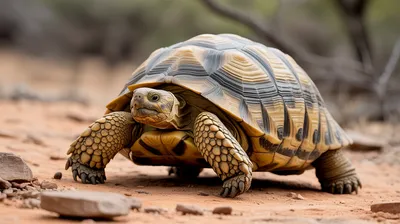
African Pancake Tortoise
Malacochersus tornieri
The pancake tortoise abandoned the one thing tortoises are famous for: armour. Its shell is flat, thin and riddled with large fenestrations — genuine holes in the underlying bone — so the whole carapace flexes like a stiff leather pad. Squeezed into a crack in a granite kopje, the tortoise inflates its lungs and braces outward with its legs, wedging itself so firmly that a predator cannot extract it; the flexible shell lets it exploit crevices far too narrow for a domed tortoise. It does not withdraw and sit tight, because it cannot — instead it is the fastest tortoise known, and will simply run for the nearest rock and disappear. The low mass that comes with a hollow shell also means that, unlike a heavy domed species, a flipped pancake tortoise can right itself with a flick of the neck and leg. It lives on rocky outcrops in Kenya and Tanzania, lays a single egg at a time several times a year, and was moved to CITES Appendix I in 2019 after collectors stripped whole kopjes for the pet trade.
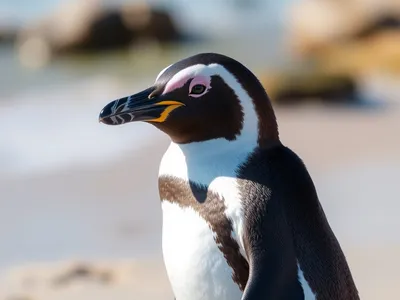
African Penguin
Spheniscus demersus
The African penguin is the only penguin that breeds on the African mainland and its islands, and it brays like a donkey — hence its older name, jackass penguin. The bare pink patch above each eye is a radiator: in heat, blood is shunted into the supraorbital gland region and the skin flushes a deeper pink as it dumps heat to the air, which is how a bird built for cold survives Namibian and South African summers. Its collapse is a case study in how an unrelated industry can destroy a species. For centuries penguins nested in burrows dug into metres-deep guano; when guano was scraped off the islands as fertiliser in the nineteenth century, the penguins were left nesting on bare rock, exposed to gulls and to lethal heat. Then commercial purse-seining stripped the sardine and anchovy stocks, and the fish that remained shifted east, away from the breeding colonies. From roughly a million pairs around 1900, fewer than 10,000 breeding pairs remain, and the species is now Critically Endangered.
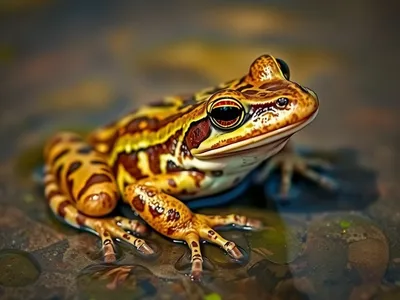
African Reed Frog
Hyperolius viridiflavus
The African Reed Frog is a small, agile amphibian known for its vibrant coloration and remarkable adaptability. These frogs are typically found in wetlands, marshes, and reed beds throughout sub-Saharan Africa, often displaying a variety of colors and patterns, ranging from greens and yellows to browns and even blues. Their skin secretes a waxy substance that helps prevent dehydration, enabling them to thrive in both permanent and temporary water bodies. African Reed Frogs are especially famous for their loud, distinctive calls during the breeding season, which can be heard echoing across wetlands at dusk and night.
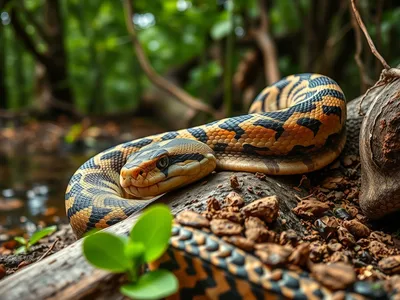
African Rock Python
Python sebae
The African Rock Python is Africa's largest snake and one of the largest python species in the world. Characterized by its thick, muscular body and distinctive dark blotched pattern, it can grow up to 6 meters (20 feet) in length. This non-venomous constrictor is highly adaptable and found across a wide range of habitats, including savannas, forests, and near water bodies. African Rock Pythons are solitary and ambush predators, relying on stealth and power to subdue large prey such as antelope, monitor lizards, and even crocodiles. Despite their formidable size, they face threats from habitat loss and hunting.